
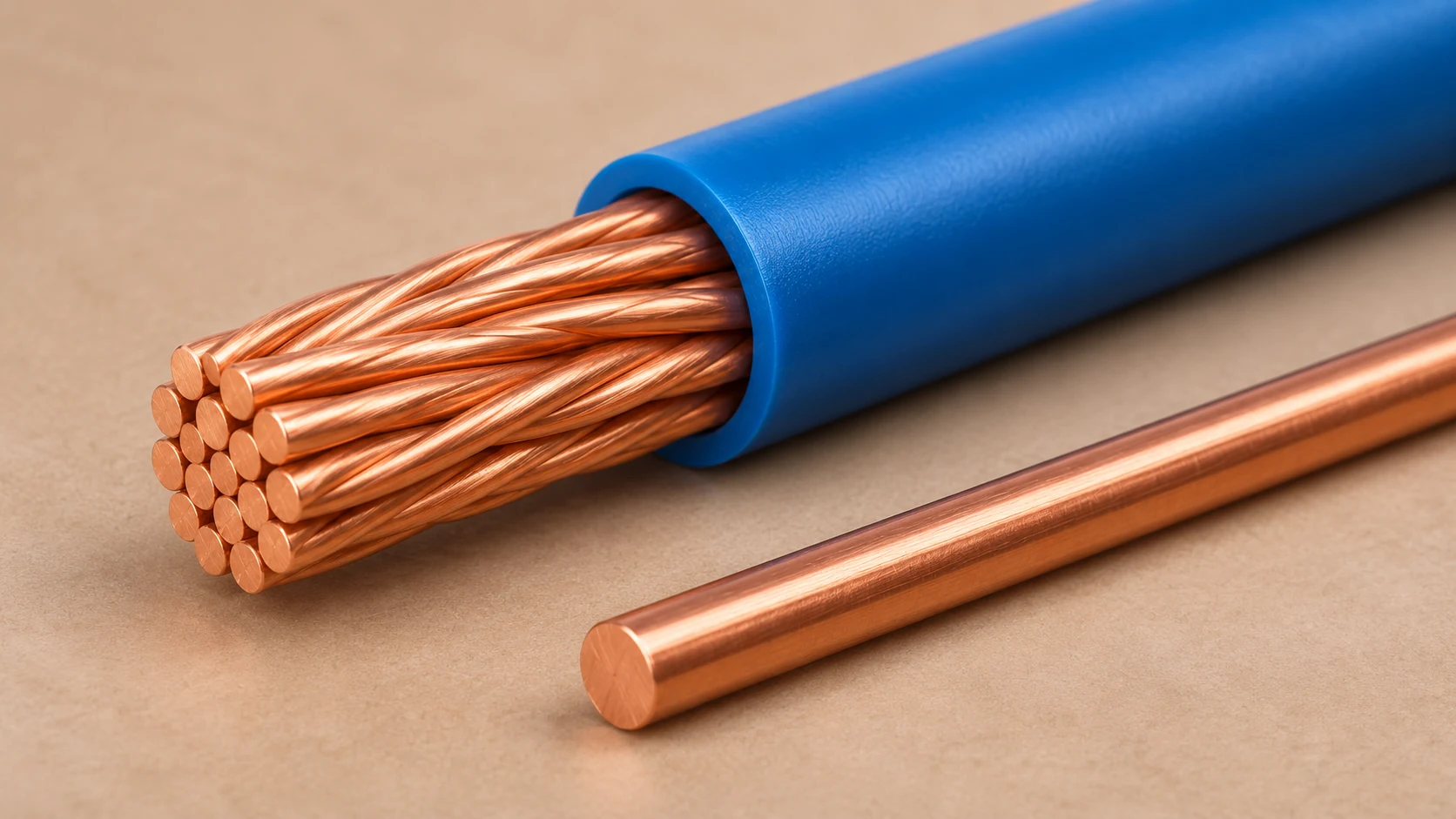
An AWG to mm2 (mm²) conversion gives the nominal conductor cross-sectional area in square millimeters. For example, 12 AWG corresponds to approximately 3.31 mm² in the round-wire geometry used below. That number is an area reference, not a recommendation to replace a cable with a particular metric size.
For cable and terminal selection, keep the conversion beside the actual conductor specification. Insulation diameter, conductor construction and the terminal’s documented wire range answer questions that an area conversion cannot.
AWG to mm2 chart: calculated nominal conductor area
The table uses the AWG geometric progression described in the National Bureau of Standards’ Copper Wire Tables. Areas are calculated before rounding to two decimal places. They describe nominal round-solid-wire geometry; they are not catalogue metric-size pairings or measured outside diameters of stranded cable.
| AWG | Calculated nominal area (mm²) |
|---|---|
| 26 | 0.13 |
| 24 | 0.20 |
| 22 | 0.33 |
| 20 | 0.52 |
| 18 | 0.82 |
| 16 | 1.31 |
| 14 | 2.08 |
| 12 | 3.31 |
| 10 | 5.26 |
| 8 | 8.37 |
| 6 | 13.30 |
| 4 | 21.15 |
| 2 | 33.63 |
| 1/0 | 53.48 |
Smaller AWG numbers indicate larger sections. The designation 1/0 is also called “one aught”; it uses a gauge index of zero in the formula below. Retain the AWG designation when requesting equipment compatibility information, rather than replacing it with the rounded number alone.
The formula makes the conversion reproducible
For a gauge index n, the nominal diameter d in millimeters is:
d = 0.127 × 92((36 − n) / 39)
The circular cross-sectional area is then A = π × d² / 4, expressed in mm². The NBS reference defines the AWG progression using its endpoint diameters and equal-ratio steps. These equations express that same geometry in metric units.
For 12 AWG, the calculation gives a diameter of approximately 2.05 mm and an area of approximately 3.31 mm². Calculate with the unrounded diameter and round the area afterward. Using a rounded diameter first can change the final digits. The diameter in this example concerns a nominal solid round wire, not the complete insulated cable.
Metric catalogue pairings are a different kind of table
A manufacturer’s cross-reference can associate an AWG size with a nominal metric catalogue size. That association need not equal the calculated area. For example, Multi/Cable’s reference pairs 12 AWG with 4.0 mm², whereas the geometric calculation above gives approximately 3.31 mm².
Keep the table’s purpose visible. “Calculated area” and “catalogue pairing” are different column headings, and neither automatically approves a substitution. When a specification calls for an AWG conductor, a proposed metric alternative still needs the responsible project’s review and the relevant cable and equipment documentation.
Conductor area excludes insulation and strand gaps
The metal area is distinct from the space occupied by insulation. For a stranded conductor, the metal comprises the individual strands; the bundle’s overall outline also encloses gaps. Its outside diameter therefore does not supply the same information as the conductor’s cross-sectional area.
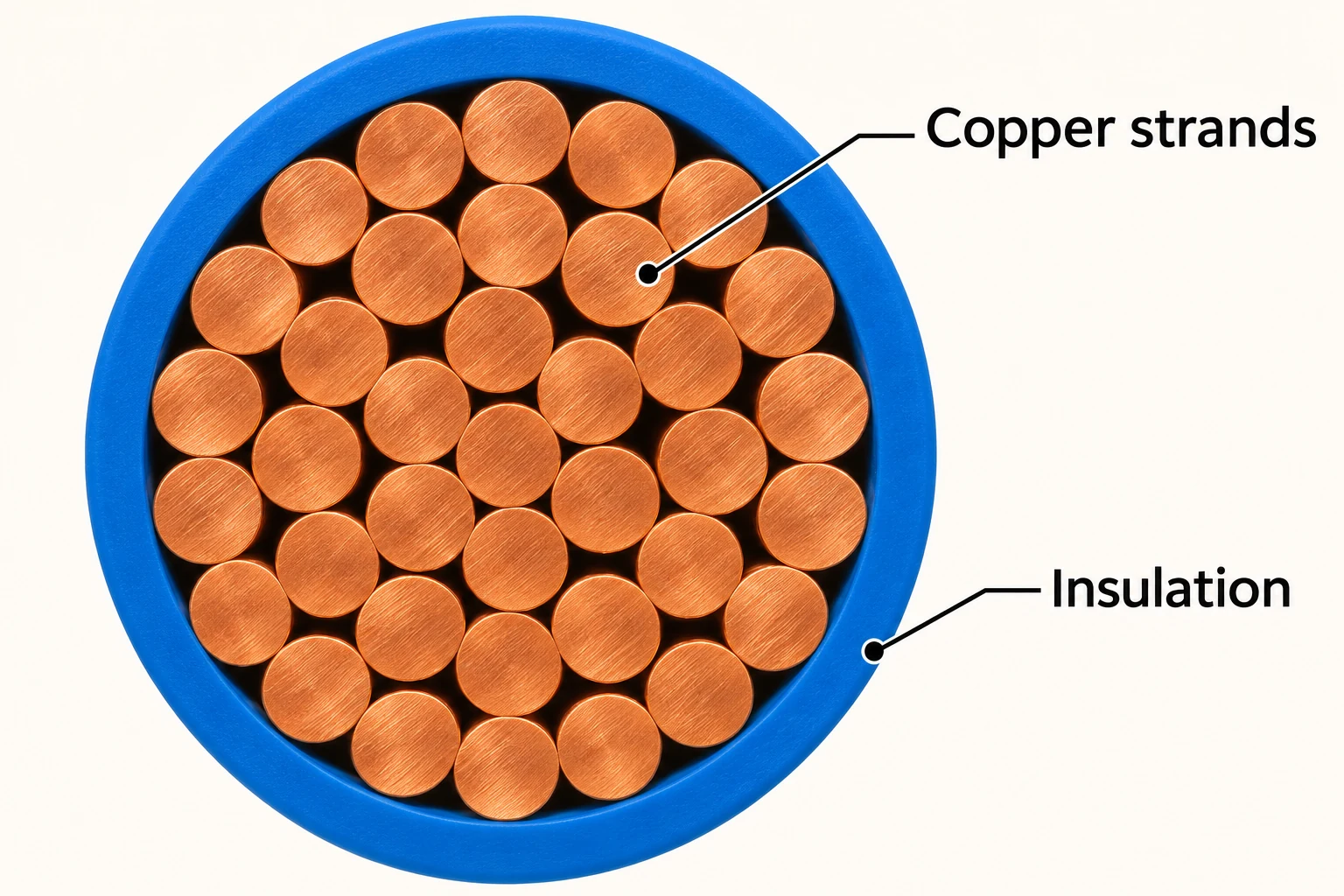
This distinction matters when discussing a terminal opening or an insulated collar. Phoenix Contact’s ferrule guidance separates conductor construction from insulation and also notes that a crimp profile can affect fit in the receiving space. A matching area number alone cannot establish that the prepared termination will fit the equipment.
Use the actual cable and terminal documents together
For a terminal enquiry, provide the cable’s stated size, conductor material and construction, along with the terminal reference and application. Where the cable manufacturer lists both AWG and mm², retain both descriptions. Request confirmation against the actual conductor and termination arrangement, including the relevant preparation and tooling documentation.
YOJIU’s SC(JGA) tin-plated copper lug page describes inspection-hole copper lugs and lists item references, bolt options and dimensions separately. Those fields help identify a product for discussion. A model suffix or bolt-hole dimension should not be treated as proof that an AWG conductor is approved for it.
A useful enquiry therefore keeps three records separate: the original cable designation, the calculated area used for comparison, and the proposed terminal’s documented conductor range. Resolve any mismatch against the manufacturers’ information before selection. The conversion table supplies no ampacity rating, protective-device choice or universal crimping instruction.