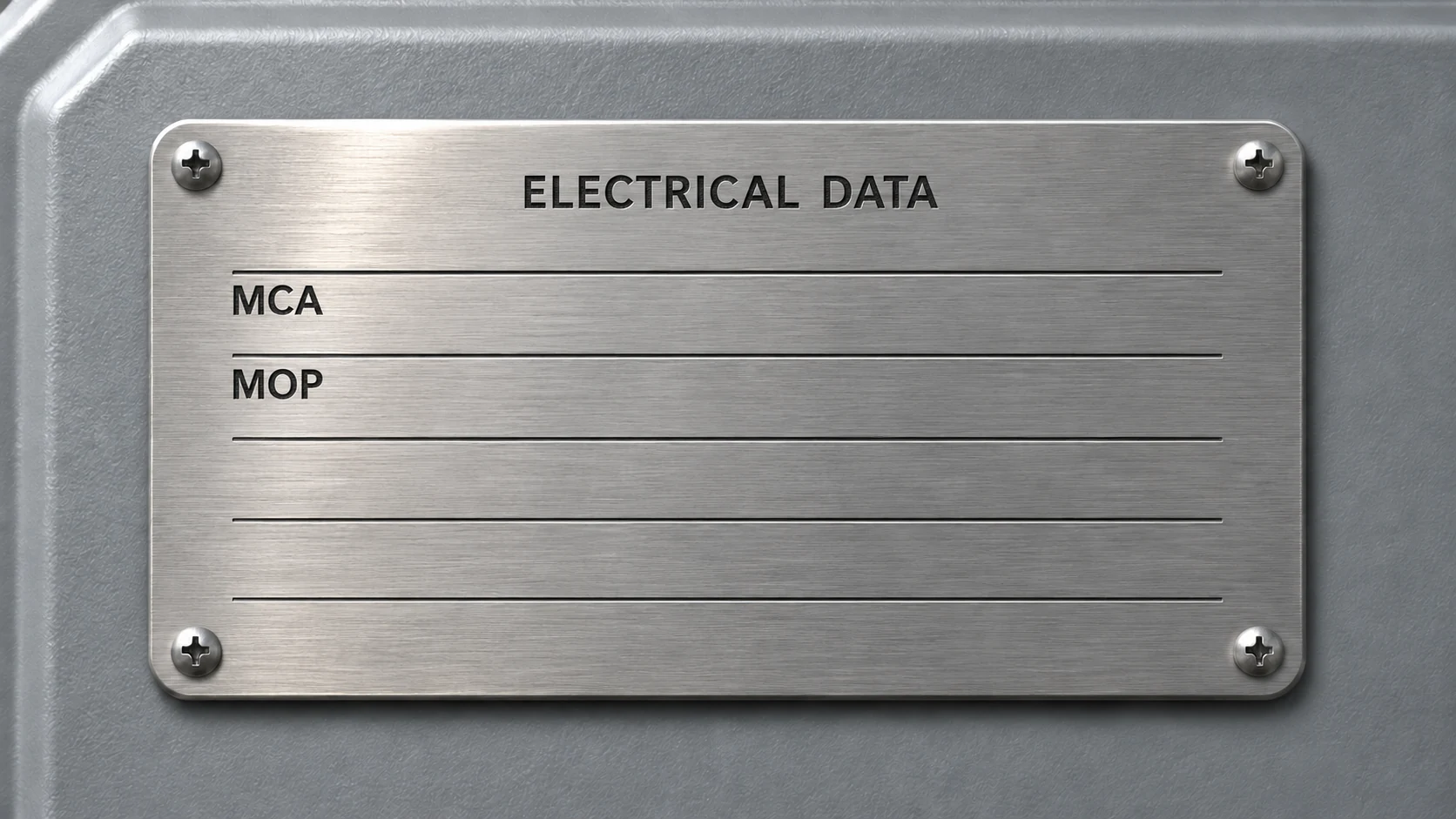
Minimum circuit ampacity (MCA) is the equipment manufacturer’s stated minimum ampacity for the supply conductors serving a particular unit configuration. Ampacity means current-carrying capacity. The MCA field helps identify an electrical requirement; it does not provide a complete cable, protective-device or terminal specification.
When reading a nameplate, keep MCA beside the equipment model and its applicable instructions. A rating copied from a similar unit, or from a catalogue row for a different option, can answer the wrong question.
Minimum circuit ampacity and protection limits have different roles
MCA concerns the supply conductors. Maximum overcurrent protection, shown as MOP in the manufacturer examples cited here, concerns the protective-device limit. These are separate fields with separate purposes. Reading one as a substitute for the other loses that distinction.
Trane’s equipment documentation defines MCA and MOP separately and identifies MOP as a protection rating or maximum fuse size. The exact device wording on the actual equipment and in its instructions remains relevant. A generic definition should not override a product-specific statement about the permitted protective device.
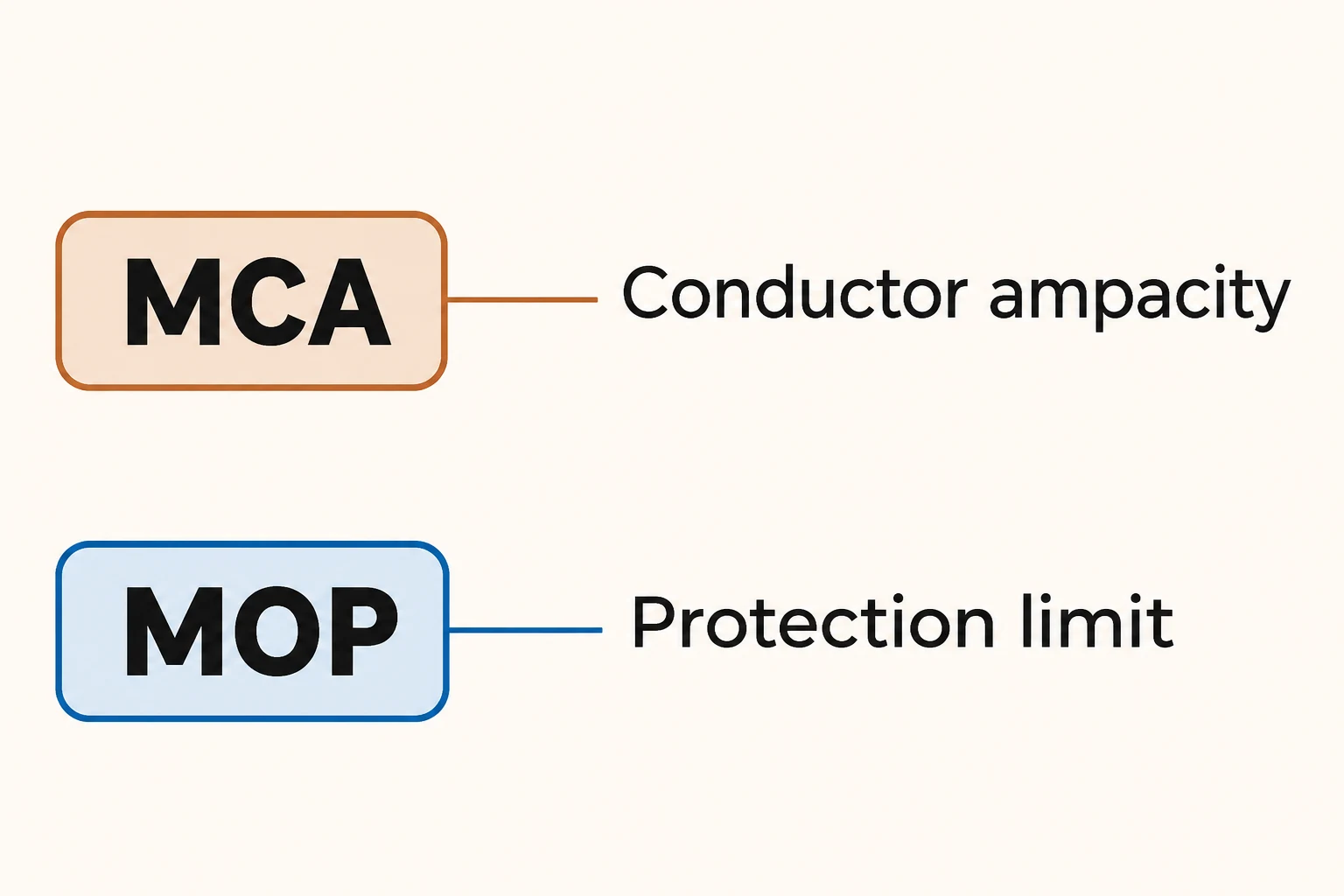
For a document review, transcribe each field under its own heading. Retain any accompanying note about the device or circuit. If the equipment uses another abbreviation, consult its legend rather than assigning a meaning from a different manufacturer’s example.
The model and installed options determine which data apply
An equipment family can have several electrical configurations. Daikin’s DAQ instructions, for example, provide different MCA entries for the air handler and optional electric-heat arrangements. The example shows why the unit description and installed options belong with the electrical data.
A general product brochure may describe the family without identifying the configuration at the project. Before an electrical professional interprets the ratings, the documentation should establish the actual unit identity and relevant options. A clear nameplate record and the matching manufacturer’s instructions help resolve that dependency.
Keep the revision and source of the document attached to the record. Where a catalogue, equipment plate and accessory document appear to disagree, identify the conflict and request clarification from the equipment manufacturer. Do not silently combine fields from different configurations into a new specification.
MCA is a rating, not an observed operating current
The MCA field is stated equipment data. An operating-current observation describes the equipment under the conditions present when that observation was made. A reading does not replace the applicable MCA value, and the MCA value does not tell a reader what a meter will show at every moment.
Manufacturer calculation methods also have an equipment scope. Neptronic’s explanation identifies its MOP calculation as applying to humidifiers, while the cited air-handler documents distinguish their own configurations. A formula from one example should not become a universal rule for unrelated equipment. This guide interprets the labels without prescribing a field calculation or measurement procedure.
Keep the equipment record separate from the accessory enquiry
A useful handoff to the project electrical professional keeps the following information together:
- Unit identity: the actual model and its nameplate record.
- Configuration: installed options and the electrical-data row that corresponds to them.
- Separate ratings: MCA, the protection field and any associated device notes, without substituting one for another.
- Applicable documentation: the equipment instructions and any unresolved differences between documents.
After the conductor requirements are established, a cable-termination enquiry still needs the actual conductor and terminal information. YOJIU’s SC(JGA) copper lug page identifies an inspection-hole lug family with separate item, bolt and dimensional information. Those product fields do not give the lug an equipment MCA rating or establish suitability for a particular unit.
Request accessory confirmation against the designer-specified conductor and the relevant product documentation. If MCA is missing, illegible or tied to an uncertain configuration, return that specific question to the equipment manufacturer or responsible electrical professional. Resolving the missing equipment information is the next step; selecting a wire gauge or breaker from an isolated number is outside this label-reading task.