
An insulation resistance test determines resistance from an applied DC test voltage and the resulting current response. An existing result describes the tested path under the conditions recorded for that test. It can contribute to an equipment assessment, but the resistance value alone does not identify a unique fault or establish a product’s remaining life.
Engineers and buyers can start with the record around the number. The report should identify the test object and method, and provide the context needed to compare earlier results.
Time and environment belong beside the insulation resistance test result
A reading can change during a test because charging and absorption currents change with time. Two values captured at different durations may therefore describe different points in the response. The duration is part of the result’s context, not an optional note.
Temperature and moisture conditions also deserve attention. Their influence depends on the insulation and its condition; a generic adjustment rule should not replace the applicable equipment or method information. Megger’s diagnostic guide treats temperature, humidity and instrument behavior as interpretation issues rather than reasons to read every resistance value in isolation.
When the environmental record is missing, identify that gap before describing a difference as deterioration. A comparison becomes easier to assess when the report states the recorded conditions and explains any compensation. An unexplained change in conditions and a change in the equipment itself are different questions.
High, low and over-range readings support different observations
A high recorded resistance describes that test path at that time. Its usefulness depends on the method, conditions and measurement range. Avoid turning the observation into a claim that every part of the equipment is free from defects. A report can clearly state what was measured while leaving a wider assessment to the responsible specialist.
A lower reading is a reason to examine the context and the applicable assessment method. Current can pass through insulation or along its surface, as the RS explanation describes. A single resistance value does not separate every possible contribution. Naming one component or one cause from the number alone goes beyond what that record establishes.
An over-range or “infinity” indication means the resistance exceeds the instrument’s measuring range; it is not an exact infinite resistance. Retain the instrument’s range qualifier and consult its display definition. Replacing the indication with an invented exact number removes information and can distort a history of results.
Keep an assessment conclusion separate from these observations. The applicable equipment documents, test method and responsible assessor determine how the record is used. This distinction allows a report to identify a real information gap without assigning an unsupported pass, failure cause or service-life prediction.
Compare records before calling a trend
A history is useful when the records describe comparable conditions. Fluke’s guide identifies contextual information, output test voltage, duration and temperature treatment among the data to retain. The original value should stay attached to that information so a later reader can understand the comparison. Keep original units visible when consolidating reports.
The following questions help review an existing report:
- Object: Does the record identify the asset, tested path and included components?
- Voltage and duration: Are these recorded, and do they correspond to the method used for the earlier result?
- Environment: Are temperature and relevant moisture conditions documented, including any stated compensation?
- Instrument and history: Are the instrument identity, range qualifiers, date and previous records available?
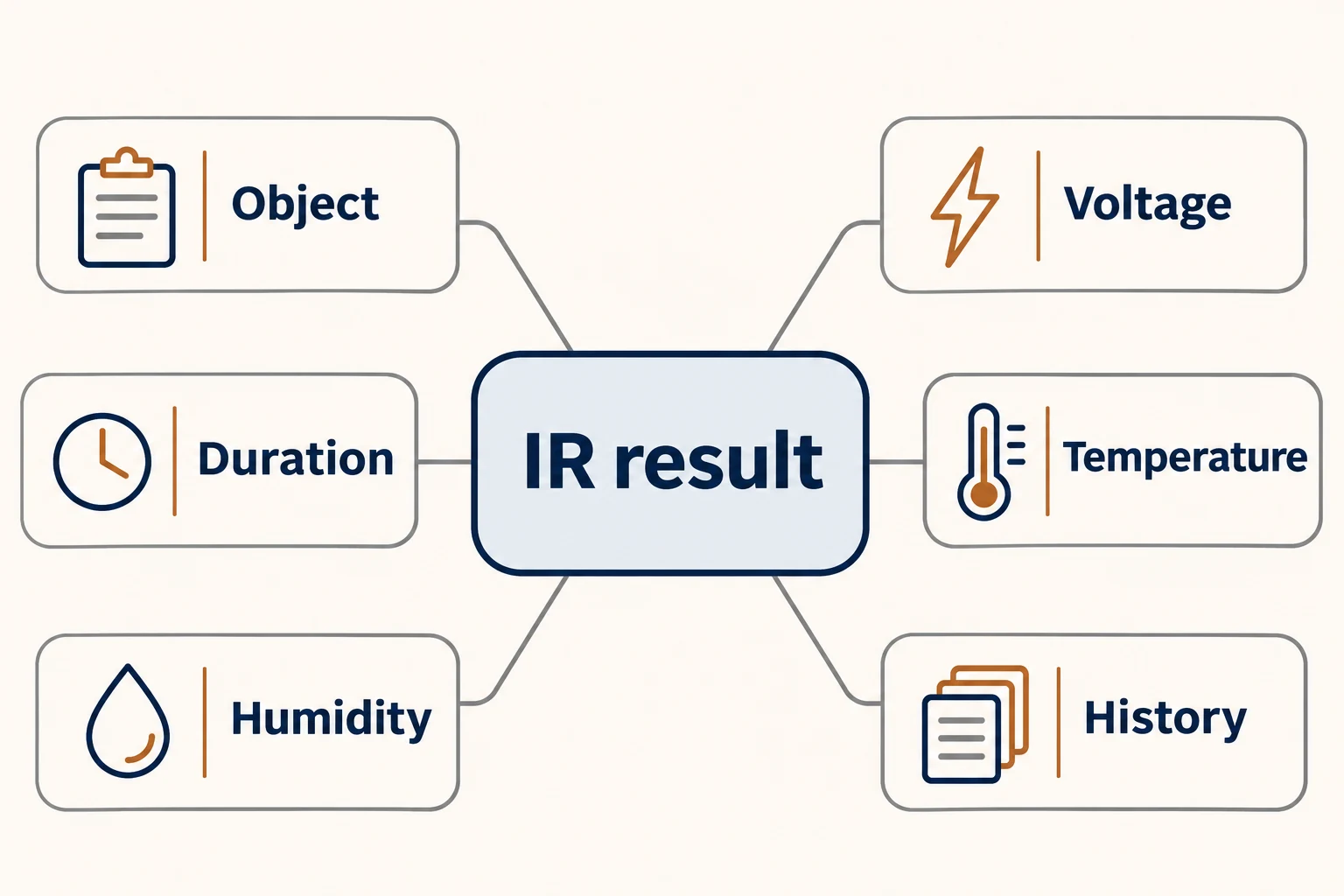
These questions review documentation; they do not specify how to perform a test. Where records differ, describe the difference explicitly and ask the responsible specialist whether the comparison remains meaningful. A chart of values is more informative when it preserves changes in method or configuration instead of presenting every point as directly equivalent.
Separate the reported observations from the explanation offered for them. An unexplained decline and a confirmed cause should remain distinct entries. That separation makes a technical review more precise and helps a buyer request the missing evidence.
Component documents and assembly results answer different questions
A cable-accessory reference identifies a component; a test record identifies the path actually assessed. YOJIU’s heat-shrink termination product page lists termination-kit variants. Those references can help identify an accessory in the project documentation, but they do not establish which component produced an assembly-level reading.
For a supplier discussion, provide the component reference together with the report’s stated scope and relevant context. Ask the supplier to address the specific document or product question. Keep any conclusion about the complete cable arrangement with the responsible project assessor, supported by the applicable method and records.